Desert
The cardón: the giant cactus that only grows on the Baja California peninsula
It can live more than two centuries and top 19 meters in height. The cardón is endemic to this peninsula, and it keeps its age written in a language scientists have only recently learned to read.
A cactus found nowhere else
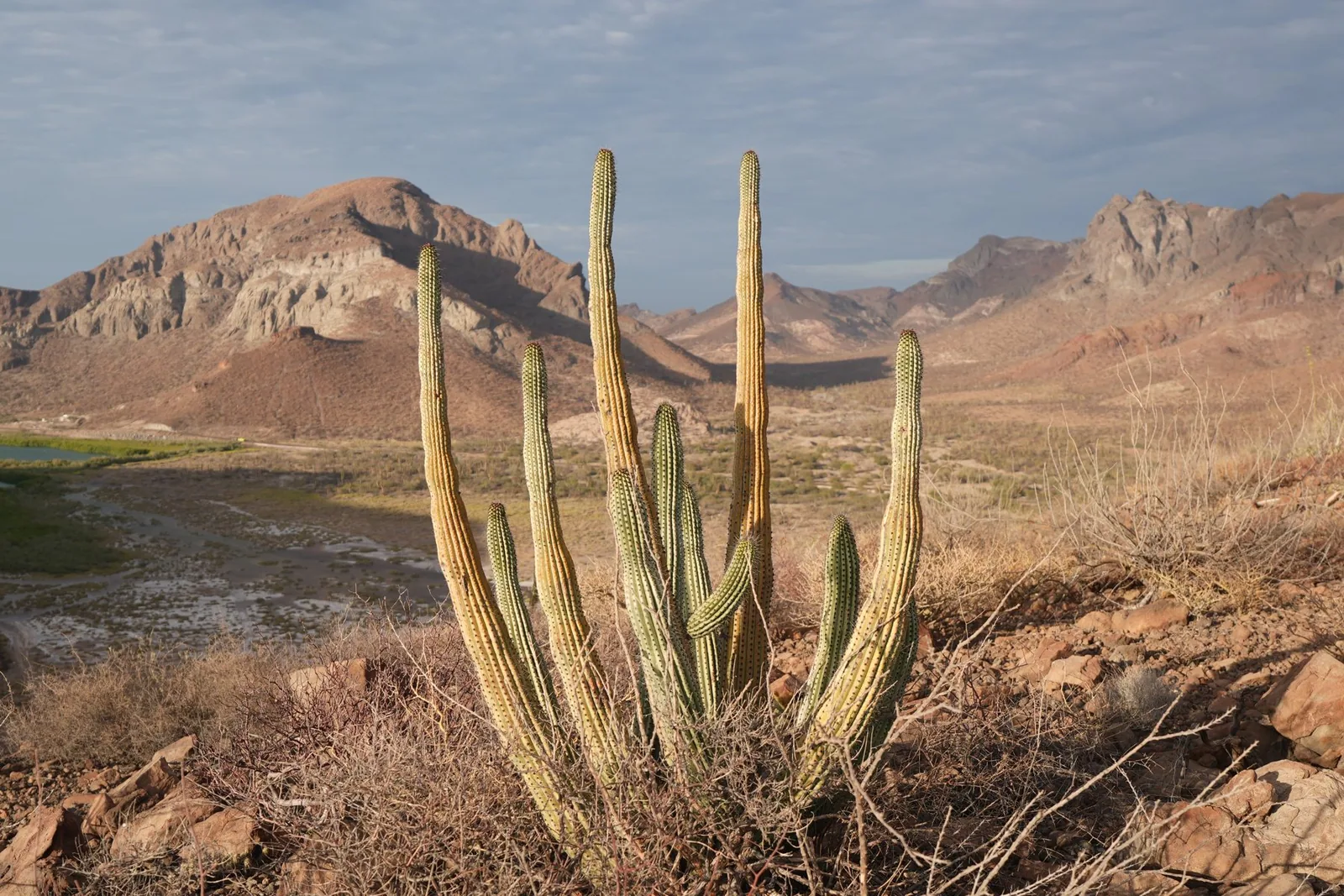
The cardón (Pachycereus pringlei) is endemic to northwestern Mexico: it grows naturally only on the Baja California peninsula and in the state of Sonora. It is the tallest cactus species on record — the tallest documented specimen, per Guinness World Records, measured 19.2 meters, though a typical mature cardón stands around 10 meters.
How you date a giant with no rings
Unlike trees, cacti have no growth rings to count their age at a glance. A team of researchers — including Exequiel Ezcurra, the same scientist behind the carbon study on this region’s mangroves — used radiocarbon dating on spines from the base of the stem to estimate the age of cardones of different sizes across six sites in Baja California.
The study, published in 2016 in the journal Radiocarbon, found an average growth rate of just 9.8 centimeters a year, ranging from 3 to 23 centimeters depending on the individual. Accumulated over a lifetime, that difference means two cardones of the same size can be very different ages.
Centuries of life in the same spot
The largest, best-documented specimens are estimated at 200 to 300 years old. A cardón you pass on a hike may have started growing generations before any nearby road or town existed.
More than a cactus: a shelter
Its size and arms provide shade, nest sites and perches for birds, along with night-blooming flowers that feed pollinating bats. In a desert where few plants reach that height, the cardón acts as a kind of backbone of the landscape: other forms of life depend on its presence in ways that are not always obvious at a glance.
Spotting one on a hike
Its thick, upright arms, grayish-green color and height set it apart from other columnar cacti in the southern Baja desert. Next time a land hike is part of a Con Gorra expedition, it’s worth stopping in front of one: that cardón was probably there long before the trip began, and will likely still be there long after.
References to keep exploring
- Radiocarbon · Delgado-Fernández, Garcillán & Ezcurra (2016) · On the Age and Growth Rate of Giant Cacti: Radiocarbon Dating of the Spines of Cardon (Pachycereus pringlei)
- Guinness World Records · Tallest cactus species
Sources accessed on November 8, 2026. Editorial text by Con Gorra Expeditions.