Marine life
Dolphins in the Sea of Cortez: two types of bottlenose that look alike but aren’t
Off La Paz and La Ventana, two distinct ecotypes of bottlenose dolphin share the same waters. A recent study found they don’t react the same way to a boat.
One name, two ways of living in the sea
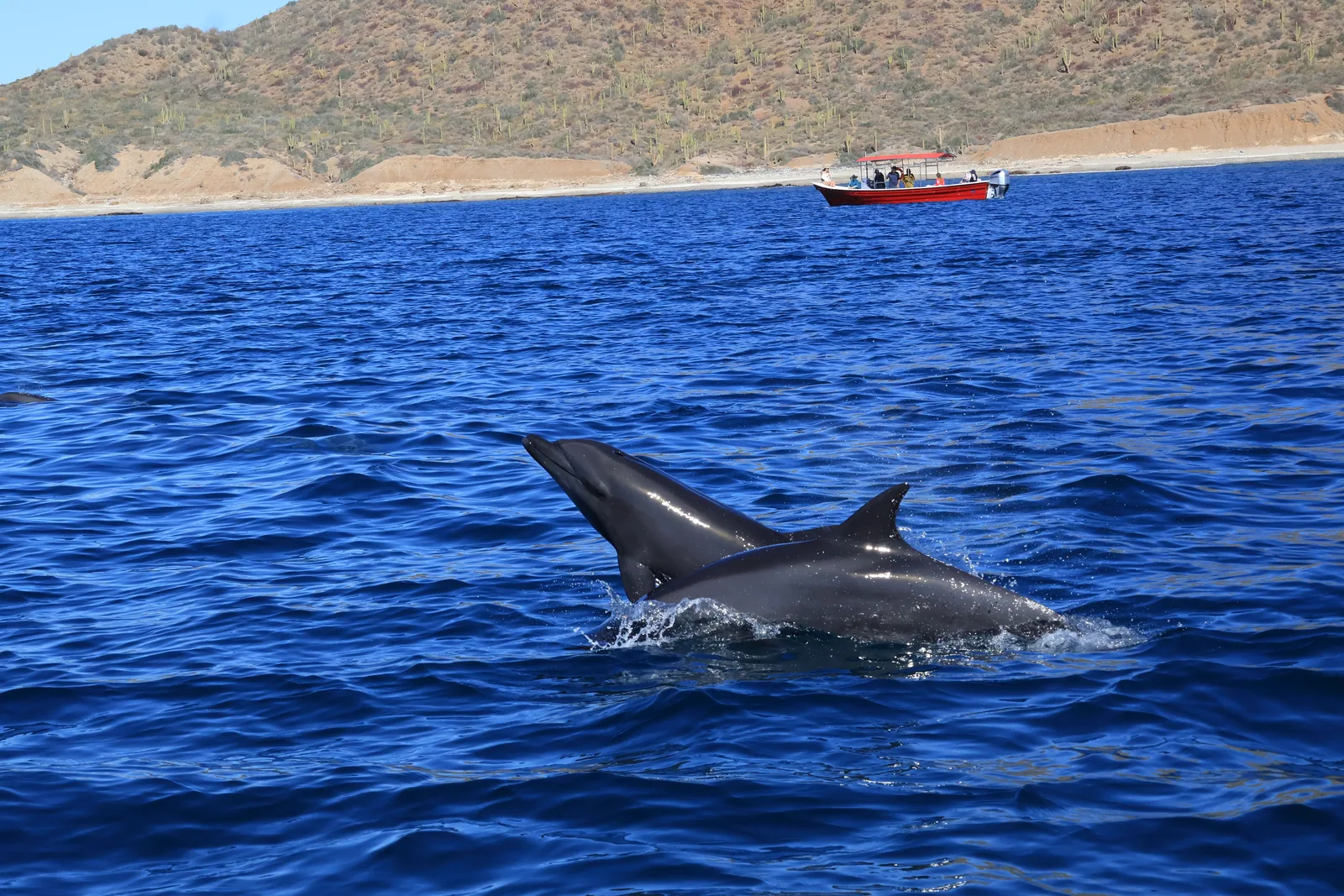
The bottlenose dolphin (Tursiops truncatus) is one of the species most frequently encountered by boats in the Gulf of California. But not every bottlenose dolphin in the region lives the same way: researchers have documented two distinct ecotypes in Bahía de La Paz, off La Ventana — one coastal and one oceanic — with differences in habitat and behavior despite belonging to the same species.
What sets each ecotype apart?
The coastal ecotype moves through waters closer to shore and, according to the research, appears more habituated to the presence of boats. The oceanic ecotype frequents more open waters and showed a different response to a boat stopped nearby: its whistles shifted in frequency as the minutes passed, something the authors interpret as a possible sign of lower habituation to the noise.
What the whistles reveal
A study published in 2022 in the journal PeerJ recorded the whistles of both ecotypes during the minutes after a research vessel shut off its engine nearby. The oceanic dolphins’ whistles rose in maximum, minimum and peak frequency during the second recording interval, while the coastal ecotype showed no difference between the two periods. A second study by the same team, published that same year in Diversity, found different patterns when the boat was moving, suggesting that a boat’s behavior — not just its presence — matters too.
Why this matters for any boat
Dolphins use whistles to stay in contact, coordinate and recognize one another. If engine noise forces a group to change how it communicates, that group is spending energy and attention adapting to the boat instead of doing what it would normally do: feeding, socializing or resting. A boat that slows down and avoids abrupt approaches is not just safer for passengers — it is also less disruptive to the group.
Seeing them on a trip
On a Con Gorra expedition through the Sea of Cortez — in La Ventana or during a Live Aboard — crossing paths with a group of dolphins is one of the more frequent encounters, though never guaranteed. Telling the coastal ecotype apart from the oceanic one at a glance isn’t easy, and it isn’t the point of the trip: it’s enough to watch calmly, keep your distance, and let the group decide whether to approach or move on.
References to keep exploring
- PeerJ · Antichi et al. (2022) · Changes in whistle parameters of two common bottlenose dolphin ecotypes as a result of the physical presence of the research vessel
- Diversity · Antichi et al. (2022) · Small Vessel Impact on the Whistle Parameters of Two Ecotypes of Common Bottlenose Dolphin (Tursiops truncatus) in La Paz Bay, Mexico
Sources accessed on November 8, 2026. Editorial text by Con Gorra Expeditions.