Marine life
One island, almost all the gulls: the story of Isla Rasa in the Gulf of California
More than 95% of the world’s Heermann’s gulls and elegant terns nest on a single island in the Gulf of California. Here is how that colony depends on the state of the sea.
An unusual concentration
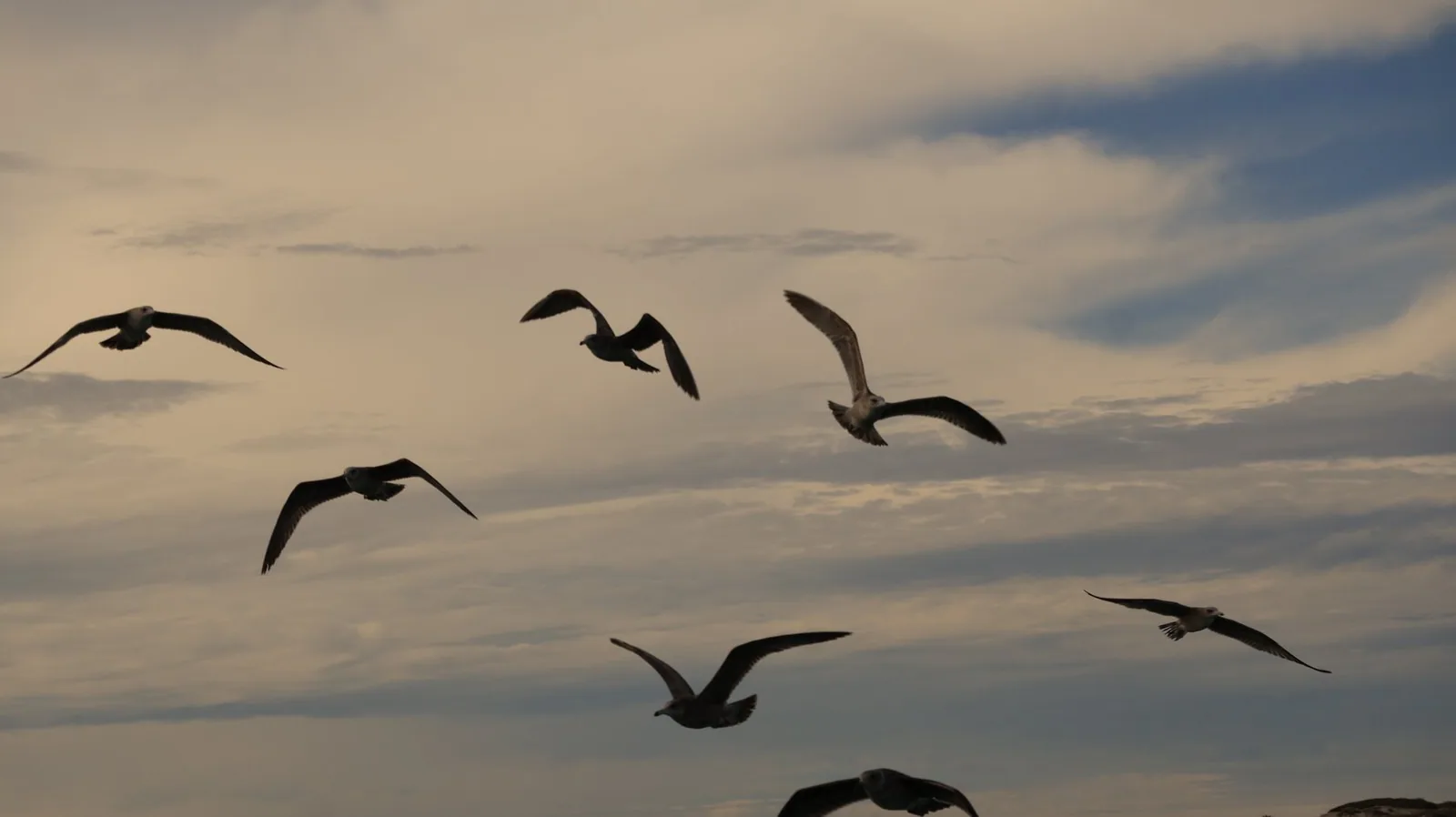
Isla Rasa is a small, uninhabited island in the Gulf of California. Every year, more than 95% of the world’s population of Heermann’s gull (Larus heermanni) nests there, along with a similarly high share of the elegant tern (Thalasseus elegans). It is one of the most extreme seabird concentrations on the planet: almost an entire species, in a single place.
What brings them there every spring
Both species arrive to nest drawn by the abundance of small fish — like sardines — sustained by the gulf’s coastal upwelling, the same phenomenon behind the marine life of the Sardine Run off the Pacific coast of Baja California Sur. Without enough food near the island, the colony simply has nothing to feed its chicks.
When the sea warms up, the birds leave
A study published in 2015 in Science Advances documented that, in years with abnormally warm water in the gulf — starting with the 1998 El Niño, and recurring in 2009, 2010, 2014 and 2015 — the birds arrived at the island in April as usual, but left without nesting. Warm water blocks the upwelling of cold, nutrient-rich water, reducing the small fish they depend on; sardine overfishing compounds the problem. In those years, part of the colony moved toward Southern California in search of food.
An indicator, not just a spectacle
Thousands of birds abandoning the island without nesting is not an isolated, anecdotal event: it is a measurable signal of what is happening to the sea’s productivity that year. In that sense, Isla Rasa works as a thermometer for the gulf as much as a bird sanctuary.
What you can see from a boat
You don’t need to land on Isla Rasa — it is, in fact, a protected area with restricted access — to notice these birds. Gulls, terns and other seabird species fly over much of the Gulf of California, including the area where the La Ventana expedition operates. Learning to read their flight and feeding behavior is another way to read what is happening beneath the surface.
References to keep exploring
Sources accessed on November 8, 2026. Editorial text by Con Gorra Expeditions.